
Professional tutoring in London, online and abroad.
I am a highly experienced tutor who specialises in helping students gain entrance to competitive UK schools. I hold three first class university degree qualifications (BAHons, MSc and CHE) in Philosophy, the Philosophy of Science, and Geology. During the past decade I have gained over 10,000 hours of experience and successfully placed over 200 students into the UK's leading educational establishments.
The bulk of my experience lies in the following areas:
Maths – 8+ to A-level
English – 8+ to A-level
Biology, Chemistry and Physics – 11+ to GCSE
Philosophy – A-level and Degree level
I conduct home visits across London alongside offering online tuition via Skype or Facetime. This involves the use of an interactive online whiteboard which provides an excellent learning experience. You can see a demo of the whiteboard here.
My students have gained places in the following schools:

by Femke Bolle
by Femke Bolle
How much can you achieve in a year of tutoring? Take a look at writing samples from two of my students, taken from over the course of the year, and decide for yourself.
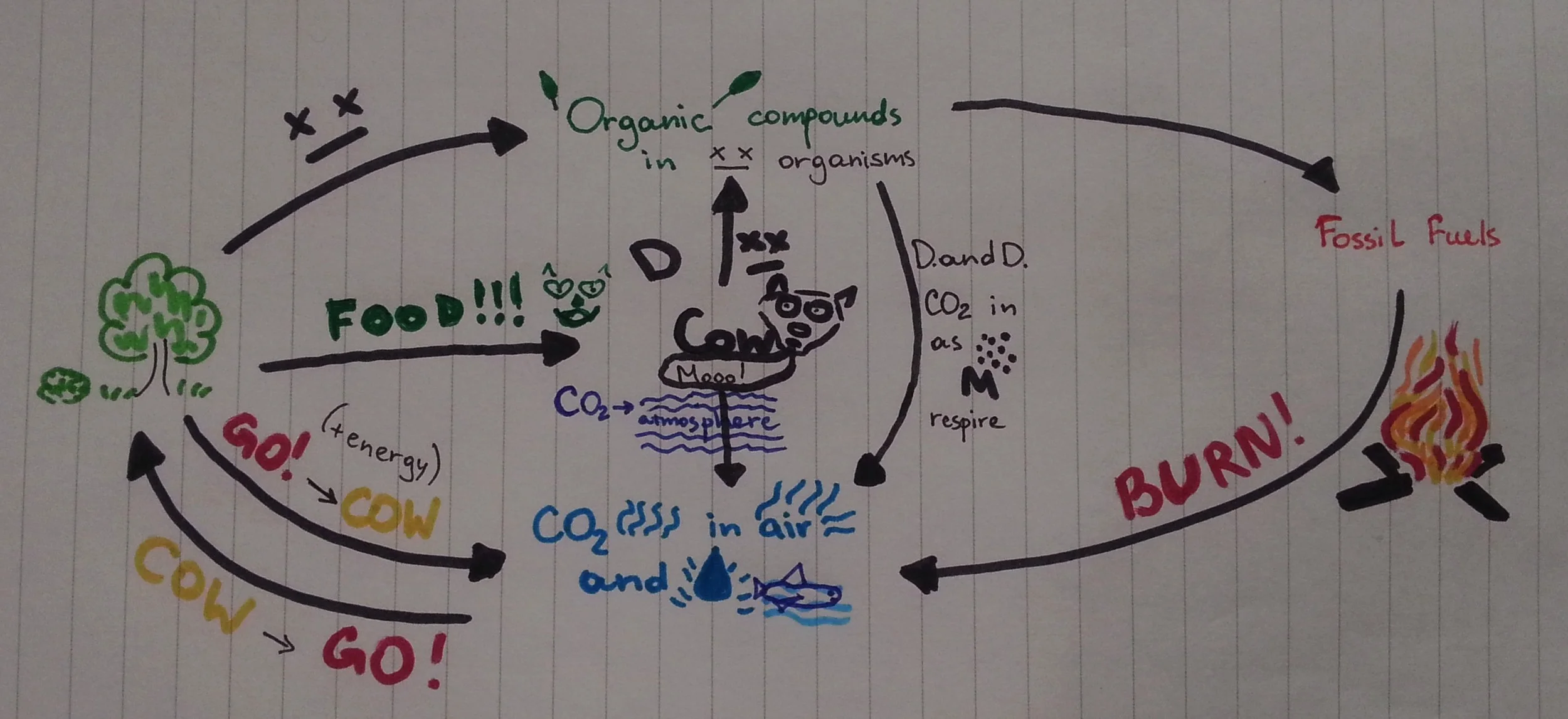
Learning only happens when brains are kept active. Passively reading through your notes or copying out of a textbook is a very inefficient way of absorbing information. Active notes is a style of note-making which is designed to keep your mind as awake as possible, with excellent results. Read on to see how it works.
Search the archive by category, or browse some of my most popular blogs below.

Grammar is always essential, and in entrance exams it is an crucial thing that examiners look for. Learn how to spot these common mistakes, and complete the given exercises to avoid them completely.
How much can you achieve in a year of tutoring? Take a look at writing samples from two of my students, taken from over the course of the year, and decide for yourself.
A reading list organised by age and difficulty, geared to expand students' vocabulary and grammar.
The 11+ comprehension can be hard to prepare for, but most papers tend to ask the same types of questions year after year. Here I outline the four most common question types and explain how to answer them.
Expanding vocabulary can be challenging, and some students find it hard to sit down and write a whole story on command. This blog post explains a fun way to get students interested in writing, and gets them working hard on their vocabulary too.
A solid vocabulary is essential for English success. Learn how to build a vocabulary bank which is useable, effective and succinct.
This is a quick checklist of things which students should include in their stories if they want to gain top marks in their 11+ stories.
As a parent or a new tutor, it can be hard to know what mark to award the stories that you are presented with. Schools don't typically release mark schemes, and as a parent you usually don't have many other stories to compare to. The blog post explains what to take into account when marking stories, and gives a simple methodology to follow.
A detailed explanation of how exactly to use the colon. Be warned, after reading this you'll begin to notice its misuse everywhere.
As I've said before, it is very difficult to absorb information passively. Many people try and read philosophy in the same relaxed, switched-off way they would approach a piece of fiction, and it doesn't get them very far. In this blog I explain how get the most out of your reading, and how it can help you craft better essays and exam answers.
The 13+ usually refers to an entrance exam taken by children in Year 8 who plan to enter a new school in Year 9. However, "13+" can mean a few different exams which need to be prepared for differently. Read on to find out more.
More and more schools are requiring applicants to take pre-tests well in advance of the usual entrance exams. Read on to learn exactly what they are and how to prepare for them.
So your child is approaching secondary school age, and you think you might like to switch to an independent school or a grammar school. Read on to get an overview of the different exams and assessments you'll be facing.
At its heart, the 11+ is an exam taken by children aged 10-11 who plan to enter a school at Year 7. The 11+ exam is taken in Year 6, typically in January. However, "11+" is an umbrella term which can apply to any of the following...
Grammar schools are state funded schools which achieve outstanding academic standards while being free to attend. Compared to expensive private schools, they are often an attractive option. Read on to find out about their entrance requirements.
Studies show that children slip backwards by an average of around 2 months' learning during the summer holidays. However, just a little bit of work can avoid this effect. Read on to see my suggestions.
The final third of most 11+ maths papers are all about thinking on your feet and adapting your maths knowledge to novel situations. This can mean that perfectly intelligent adults sometimes struggle with these questions. Can you solve this one? (I do a video explanation if not!)
Over the years I've honed a selection of excellent, mostly free, online games which provide a fun way to get better at maths and English. Useful for preparing for 7+, 11+ and 13+.
What are prime factors, and what can you use them for? Here I explain how prime factor trees can help you answer certain kinds of entrance exam questions. Features 11+ questions from St Paul's Girls' School and the London Consortium.
In June 2015 students were outraged by this particularly hard probability question. Read on to see the question and my answer to it
When I come across a particularly interesting and/or tricky maths problem, I add it to this bank. The collection spans across 11+, 13+ and 16+ / GCSE questions.
Prime numbers lie at the heart of many of the most interesting questions that crop up during 10+, 11+ and 13+ maths entrance exams. And they'll continue to be at least somewhat relevant right the way up to A-level. Read on for a fun lesson plan to get children aged 8 - 11 thinking about primes.
Exams getting close? Check that you know these key facts for 11+ maths - it's not intended to be an exhaustive list, but it's a great start.
Looking for past papers? I have a curated collection of 11+ and 13+ exam papers below.
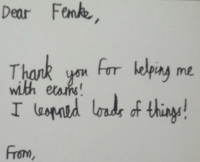
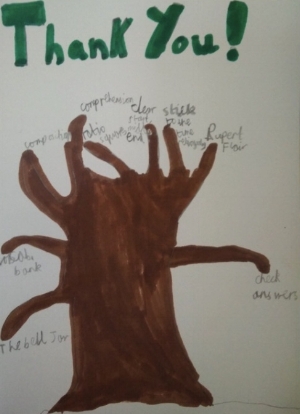
Testimonials
Testimonials
I aim to answer all enquiries within 24 hours.
I tweet regularly at @femketuition - follow me for updates!
Over the years I've honed a selection of excellent, mostly free, online games which provide a fun way to get better at maths and English. Useful for preparing for 7+, 11+ and 13+.